2026
The Complete Guide to Visual Storytelling in 2026
*Last updated: April 2026 | Reading time: 18 minutes*
Visual storytelling has evolved from cave paintings to Google Veo3 AI generations with sound effects (even music), but the fundamental goal remains unchanged: communicating ideas through imagery that resonates with audiences. In 2025, creators have unprecedented tools at their disposal, from traditional sketching techniques to AI-powered video generation APIs that can bring concepts to life in seconds.
Whether you're a filmmaker planning your next production, a content creator building your brand, or a marketing professional crafting campaigns, this comprehensive guide will guide you with knowledge and approaches to master visual storytelling in today's digital landscape.
Table of Contents
Visual storytelling has evolved from cave paintings to Google Veo3 AI generations with sound effects (even music), but the fundamental goal remains unchanged: communicating ideas through imagery that resonates with audiences. In 2025, creators have unprecedented tools at their disposal, from traditional sketching techniques to AI-powered video generation APIs that can bring concepts to life in seconds.
Whether you're a filmmaker planning your next production, a content creator building your brand, or a marketing professional crafting campaigns, this comprehensive guide will guide you with knowledge and approaches to master visual storytelling in today's digital landscape.
Table of Contents
- What is Visual Storytelling?
- The Science Behind Visual Narratives
- Core Elements of Visual Storytelling
- Modern Tools and Technologies
- The Storyboarding Process
- AI and the Future of Visual Creation
- Industry Applications
- Building Your Visual Storytelling Skills
- Common Mistakes to Avoid
- Getting Started: Your First Visual Story
What is Visual Storytelling?
Visual storytelling is the art and science of conveying narratives, emotions, and information through visual media rather than relying solely on words. It encompasses everything from a simple icon to complex multi-scene storyboards that map out entire films.
Why Visual Storytelling Matters More Than Ever
In 2025, we live in a media environment dominated by visuals. From the typography of a street sign to the endless scroll of short-form video, our attention is constantly directed by images. The sheer volume of visual information today is unprecedented, but the underlying principle is not: humans have always used images to make sense of the world and to communicate ideas more directly than words alone.
Research underscores this: the brain processes visuals more rapidly than text — some studies estimate recognition times as little as 13 milliseconds (Potter et al., Attention, Perception, & Psychophysics, 2014). Memory retention is also far stronger for images than for words, a phenomenon known as the “picture superiority effect” (Nelson, Reed, & Walling, Journal of Experimental Psychology: Human Learning and Memory, 1976).
But beyond numbers, visuals carry an immediacy that is central to how we persuade, teach, and inspire. Whether in a TikTok narrative, a brand campaign, or a feature-length film, visual storytelling allows us to connect across languages and cultures in ways text alone cannot. This is why, even as tools evolve, visual storytelling itself has only grown more essential.
The Evolution of Visual Storytelling
Visual communication is as old as humanity. Cave paintings in Lascaux were not just decoration — they were narrative records, symbols of collective memory. Over centuries, the modes and mediums of visual storytelling expanded:
- Medieval Period: illuminated manuscripts combined image and text to make religious narratives more accessible to largely illiterate audiences.
- Renaissance: developments in perspective and anatomy allowed artists to represent space and human form with new realism, deepening the emotional power of visual storytelling.
- 15th Century Printing Press: typography and reproducible imagery transformed communication, standardizing symbols and democratizing access to visual knowledge.
- 19th Century Photography & Film: for the first time, human experience could be recorded and replayed, giving rise to journalism, cinema, and visual mass culture.
- 20th Century Modernism & Advertising: graphic design, poster art, and later television created new visual languages aimed at persuasion and identity-building.
- Digital Era (2000s onward): tools like digital cameras, editing software, and online distribution placed visual production into the hands of anyone with a computer or smartphone.
Each period brought new methods, but the continuity lies in our need to represent and share experiences visually. In this lineage, today’s AI-based tools are not a radical break so much as another stage — a set of technologies that can accelerate certain tasks but still exist alongside established practices like storyboarding, design, cinematography, and editing.
The Science Behind Visual Narratives
Why are visuals so effective? The explanation lies in both neuroscience and history.
The Neurological Advantage
Half the human brain is involved in processing visual input (Zeki, A Vision of the Brain, 1993). This makes imagery our most efficient form of information intake. We are able to parse patterns, faces, and symbols at speeds text cannot match. This neurological architecture explains why visual cues dominate communication: they are faster, more memorable, and more emotionally resonant than words alone.
The picture superiority effect — documented in cognitive psychology since the 1970s — shows that people consistently recall information presented as images better than information presented as text. This scientific grounding reinforces why storyboards, film frames, and even simple sketches remain indispensable for conveying narrative ideas.
History as Evidence
Yet perhaps the more compelling case comes not from laboratory findings but from history itself. Across civilizations, visual media have been the backbone of cultural transmission:
- Ancient murals told origin myths and cosmologies long before alphabets were standardized.
- Renaissance paintings used perspective to immerse viewers in biblical and humanist narratives.
- Early cinema gave audiences a new shared experience of modernity, compressing complex stories into universally accessible moving images.
- The design revolutions of the Bauhaus and later advertising illustrated how form, typography, and layout could guide perception and emotion as directly as words.
These examples reveal a constant: visual storytelling is effective not because of any single tool or trend, but because it taps into both how our brains are built and how societies evolve.
Today’s Landscape
In the present, creators have an abundance of tools — from pencils and cameras to editing suites and AI generation platforms. Artificial intelligence can assist in visualizing ideas quickly or iterating on concepts, but it does not replace the craft of storyboarding, the discipline of editing, or the intuition of design. With tools like Google Veo3 generating entire cinematic sequences on demand and Runway ML predicting shot transitions, new possibilities now exist. AI tools helps reduce friction in the creative process, allowing storytellers to spend more energy on structure, meaning, and audience connection.
In other words, the science and history both show us that visual storytelling has always mattered, and it matters even more in a world saturated with images. The challenge is not choosing between traditional and modern tools but knowing how to integrate them into narratives that resonate.
Core Elements of Visual Storytelling
While tools and mediums evolve, the fundamentals of visual communication remain surprisingly consistent. Whether you’re designing a brand campaign, shooting a short film, or assembling a storyboard, the same visual building blocks guide how audiences perceive, process, and remember your message. These elements are not decorative—they are the structural forces that shape how a story unfolds.
Typography: The Voice of the Visual
Typography is often underestimated, but in visual storytelling it functions as both design aesthetic and message. Type carries meaning not just through the words themselves but through form: serif fonts evoke tradition and reliability, while sans-serif fonts signal modernity and clarity. In advertising, typography establishes brand personality in an instant.
Good typography should never compete with the story—it should guide the eye, reinforce tone, and make the message legible without calling attention to itself. A well-chosen typeface is invisible in the best way: it strengthens narrative voice while letting the story remain center stage.
Color: Emotional Resonance at First Glance
Color is the fastest communicator in visual design. Before a viewer reads or interprets, they feel color. Warm hues (reds, oranges, yellows) generate urgency, energy, and passion; cool hues (blues, greens) suggest calm, trust, or professionalism. In film, advertising, and branding, color palettes are carefully curated to cue emotion and meaning before a single word appears.
In storytelling terms, color is the mood-setter. A desaturated palette communicates seriousness or realism, while vibrant colors suggest optimism, fantasy, or playfulness. Effective visual narratives use color not as decoration, but as an emotional shorthand.
Space: Framing, Balance, and Breathing Room
Space is the canvas upon which all other elements exist. In design and advertising, negative space—the empty area around objects—is as important as the objects themselves. It guides the eye, creates hierarchy, and prevents visual overload.
In cinematography, space is about framing: what’s included in the shot and, perhaps more importantly, what’s left out. By controlling space, storytellers create focus. The absence of clutter ensures that nothing distracts from the essential narrative moment.
Layout: Structure That Directs the Story
Layout is the architecture of visual storytelling. In a print ad, it dictates how the reader’s eye moves across the page; in a storyboard, it defines sequence and pacing. Good layout establishes visual hierarchy, ensuring that the most important information is seen first, while secondary details support without distracting.
Cinematically, layout is mirrored in shot composition: where characters are positioned, how action is staged, and how transitions connect one frame to the next. Both in design and film, layout is not just organization—it’s rhythm.
Imagery and Iconography: Symbols That Carry Meaning
Photographs, illustrations, icons, and moving pictures - the content - act as visual wrappers for the story itself. These are the literal “visuals” of visual storytelling. Effective imagery is carefully planned - it must align with the message and propel the story forward.
Iconography, in particular, plays a crucial role in advertising and design. Symbols condense complex ideas into instantly recognizable forms: a heart for love, a lightning bolt for energy, an arrow for progress. Used thoughtfully, imagery provides clarity and speed—essential qualities in a crowded media environment.
From Design to Cinematography to Narrative
Visual storytelling is not only about aesthetics but about propelling the story forward. Advertising borrows heavily from cinematography, which in turn borrows from literature. A film director frames a scene much like a novelist frames a chapter: each decision—about typography, color, space, layout, and imagery—is in service of the story’s progression.
The best visuals “get out of the way.” They don’t overwhelm with decoration or complexity; they create a seamless path for the audience to experience the narrative. Whether it’s a billboard, a 30-second ad, or a feature-length film, the principles remain the same: design choices exist to clarify, amplify, and focus attention on the story itself.
Modern Tools and Technologies
The core elements of visual storytelling—typography, color, space, layout, and imagery—are timeless. But the tools we use to apply them have shifted dramatically over the past century. Today’s creators operate in a hybrid landscape, where traditional craft, digital platforms, and emerging AI coexist. Understanding this ecosystem is essential for leveraging the right tool at the right moment.
From Sketch to Screen: Traditional Tools Still Matter
Despite the rise of digital platforms, hand-drawn sketches and storyboards remain foundational. Consider Pixar: nearly every frame of Toy Story 4 was first mapped in pencil on paper before being rendered in 3D. The reason is simple—manual sketching offers immediacy. It allows creators to capture ideas without friction, ensuring that narrative flow is explored before technology adds complexity.
In advertising, print design principles remain relevant even in digital-first campaigns. Apple’s iconic iPod silhouette ads (2000s) borrowed heavily from poster art: bold typography, simplified imagery, and controlled negative space. These were design fundamentals applied with new technology, not replaced by it.
The Digital Era: Democratization of Production
The rise of tools like Adobe Creative Suite, Final Cut Pro, and Canva lowered the barrier to entry for creators. A small agency or even an individual could now create professional-quality visuals at scale. This democratization paralleled the explosion of distribution channels—YouTube, Instagram, and TikTok—making visual storytelling accessible to anyone with a smartphone.
Netflix’s thumbnail strategy is a telling example of digital-era visual design: every show is accompanied by multiple versions of its promotional imagery, A/B tested for typography, color, and composition. Here, layout and imagery are not artistic choices alone but data-informed design decisions aimed at maximizing engagement.
AI and Generative Tools: Acceleration, Not Replacement
In the 2020s, AI entered the scene. Tools like Runway ML, MidJourney, and Google’s Veo3 introduced the possibility of generating visuals and video sequences from text prompts. But while these tools are powerful accelerators, they are not replacements for traditional processes.
AI can:
- Generate rapid concept art for moodboarding.
- Provide quick variations for testing layouts or color palettes.
- Automate repetitive editing tasks like rotoscoping or caption generation.
But AI cannot:
- Replicate the emotional nuance of a photographer’s lens.
- Replace a director’s intuition about framing and timing.
- Build a coherent story arc without human structure.
A useful parallel is the printing press: it revolutionized how quickly and widely ideas could spread, but it did not replace authorship. Similarly, AI enhances speed and accessibility, but the art of visual storytelling remains firmly human-driven.
Integrating Tools Thoughtfully
The challenge for creators today is not choosing between traditional, digital, or AI tools, but knowing when to use which. A filmmaker might still sketch storyboards by hand, cut a teaser trailer in Adobe Premiere, and use AI to experiment with alternate visual treatments. The key is integration: letting technology handle efficiency while humans maintain vision.
The Storyboarding Process
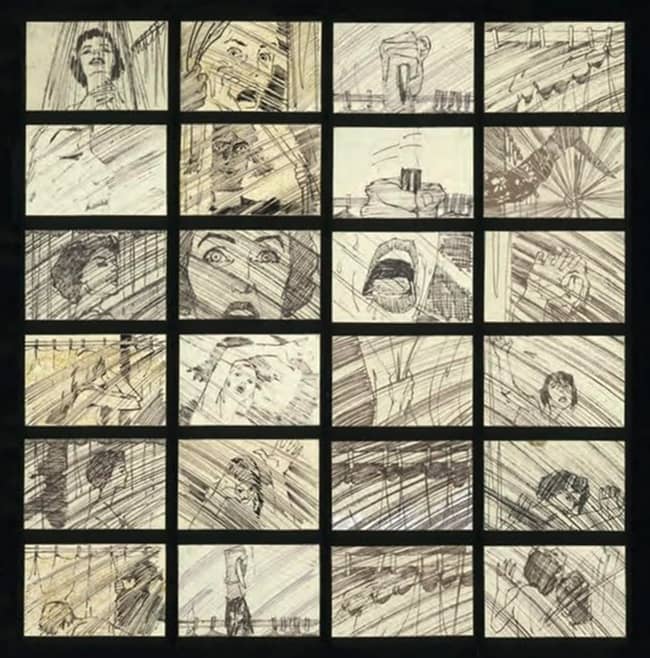
Storyboarding is where visual storytelling shifts from concept to execution. It is the blueprint of narrative—whether for a feature film, an advertising campaign, or a short-form social video. A storyboard doesn’t just visualize ideas; it sequences them, ensuring the story progresses with clarity and intent.
Why Storyboards Matter
In film, directors like Alfred Hitchcock meticulously storyboarded every scene to control suspense and rhythm. In advertising, agencies storyboard campaigns to ensure that every second of a commercial communicates the brand’s message. In digital content, creators use storyboards to plan pacing and engagement points before production begins.
Storyboards matter because they:
- Clarify vision: Turning abstract ideas into concrete frames forces creative teams to align.
- Save resources: Adjusting ideas at the storyboard stage is far less costly than reshooting.
- Direct focus: Storyboards act as a shared map across writers, designers, directors, and editors.
Elements of an Effective Storyboard
A strong storyboard balances artistry with function. It includes:
- Frames: Sketches or images that represent key moments.
- Sequence: The order of frames to establish pacing.
- Annotations: Notes on dialogue, sound effects, or movement.
- Mood cues: Indications of tone, lighting, or atmosphere.
Consider Wes Anderson: his films are instantly recognizable for their symmetrical composition and color palettes. His storyboards reflect this precision—every frame is planned to achieve consistency of tone and rhythm.
Storyboarding in Advertising
In advertising, storyboards must do double duty: propel narrative while foregrounding the product. Nike’s Just Do It campaigns often storyboard around a central motif—a runner’s journey, for instance—then structure visuals so the story resolves with brand reinforcement.
This mirrors a principle borrowed from literature: propulsion. Every frame should move the narrative forward. Visuals aren’t ornamental; they exist to clear the path for the story to emerge.
Digital and AI Support
Digital tools like Storyboarder or FrameForge make creating, sharing, and iterating on storyboards easier than ever. AI tools can further assist by:
- Generating quick draft imagery for placeholders.
- Suggesting transitions or variations.
- Auto-formatting storyboards into shareable decks.
But just as in film or advertising, AI’s role is supportive. It accelerates iteration but does not replace the creative judgment of a director, designer, or writer.
AI and the Future of Visual Creation
The next decade will be defined by how well creators learn to work with AI - not against it. Already in 2025, we’re seeing a blending of human artistry and algorithmic speed.
What AI Does Well
AI excels at acceleration. It can produce draft visuals in seconds, simulate multiple versions of a shot, or even fill in missing footage. Tools like Veo3 are starting to generate sequences complete with sound effects and early music tracks, while Adobe’s Firefly integrates generative models directly into the creative suite.
Where AI shines:
- Rapid Ideation: Turning rough concepts into visual drafts.
- Variation Testing: Exploring multiple directions for a scene, layout, or ad campaign.
- Efficiency Gains: Automating labor-intensive work like rotoscoping, cleanup, or subtitle syncing.
The Human Role Remains Central
But AI cannot replicate intuition. Storytelling is about human connection - empathy, rhythm, and cultural context no algorithm understands. A brand film still requires a director’s sense of pacing; a documentary still needs the ethical perspective of its filmmaker.
The future is a place where the best creators will learn when to delegate to AI (speed, scale) and when to assert human craft (meaning, emotion).
Industry Applications
Visual storytelling is not a single industry—it’s a language that every industry speaks differently.
Film and Television
Storyboarding, pre-visualization, and concept design remain indispensable. AI assists by generating location mockups or alternate lighting scenarios, but directors still anchor narrative vision.
Advertising and Marketing
Here, the speed of iteration matters most. Campaigns can test dozens of visuals across platforms, with AI producing quick variations. But marketers still need to tie imagery back to brand identity and consumer psychology.
Education and Training
In learning environments, visual storytelling simplifies complex topics. Animated explainers, interactive storyboards, and AI-driven simulations turn abstract concepts into concrete experiences.
Social Media and Content Creation
For creators on TikTok, Instagram, or YouTube, visuals are the currency of attention. AI tools make production easier, but the most successful creators still stand out through voice, perspective, and authenticity.
Enterprise and Product Design
Storyboards are increasingly used outside of media—think user journey mapping in UX design or visual pitches in product development. Storytelling frames not just “what a product is” but “why it matters.”
Building Your Visual Storytelling Skills
Mastering visual storytelling in 2025 is less about mastering one tool and more about building a layered skillset.
- Study the Fundamentals: Typography, color theory, and layout are timeless. AI won’t replace them.
- Practice Storyboarding: Even crude sketches sharpen narrative thinking.
- Learn Editing: Understanding pacing and rhythm is essential, whether for TikTok or feature film.
- Experiment with AI: Use AI for ideation and iteration, but always evaluate results critically.
- Analyze Media Actively: Watch films, scroll ads, and study why certain visuals grab attention.
Like any language, fluency comes from practice. The more you create, the sharper your instincts become.
Common Mistakes to Avoid
Even in a world full of tools, creators often stumble on the same pitfalls:
- Overdecorating: Treating visuals as ornament rather than narrative drivers.
- Ignoring Audience: Designing what looks good to you, not what resonates with viewers.
- Skipping Structure: Jumping straight to visuals without clarifying story beats.
- Overreliance on AI: Using generative tools as a shortcut, leading to shallow or incoherent results.
- Neglecting Consistency: Mismatched typography, color, or framing that dilutes the story’s voice.
Remember: visuals are a storytelling medium, not just an aesthetic layer. Beauty is in the eye of the beholder, it is not possible to cater to everyone's taste in aesthetics. Simplicity is beauty. Visuals are a way to convey the message, not by being impressive in and of themselves, but by carrying the story forward.
Getting Started: Your First Visual Story
If you’re new to visual storytelling, start small.
- Pick a Simple Narrative: A short story, brand message, or how-to explainer.
- Choose Project Type:
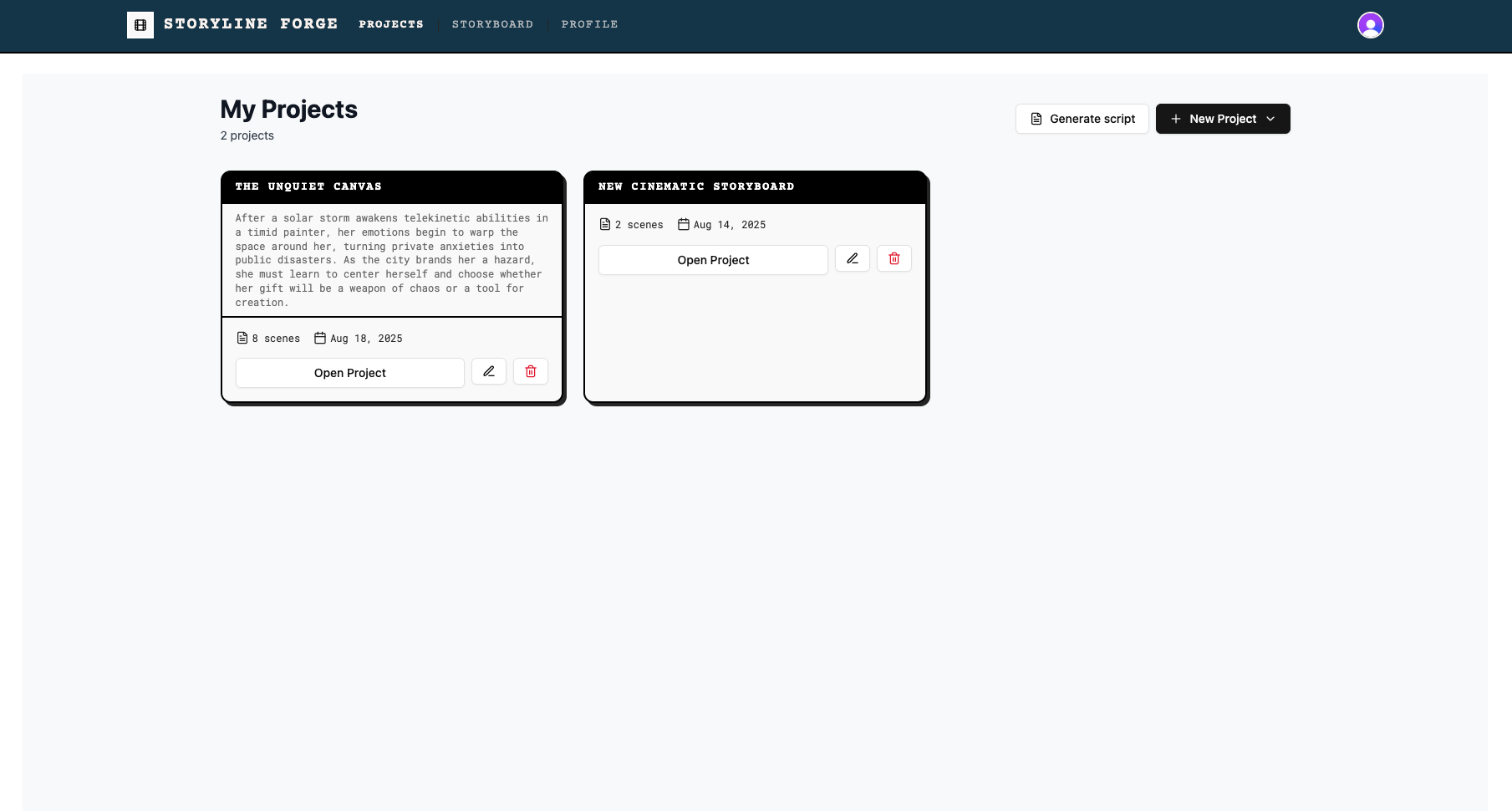
- Cinematic Storyboard - For movies, shows, and narrative content
- Ad Storyboard - For advertising campaigns and marketing content
- Generate Script (Cinematic only) - Located next to the New Project button
- Curated Prompts - Choose from SciFi, Fantasy, or Romance
- Custom Topic - Describe your own story concept
- Configure Generation - Scene Count - Choose 3-15 scenes based on story length
- Sketch a Storyboard: Focus on sequence, not polish.
- Define Mood and Tone: Choose a color palette, typeface, and imagery that match the story’s intent.
- Produce a Draft: Export a storyboard PDF, DaVinci Resolve project, or your choice of video editor.
- Refine Through Feedback: Show it to a friend, team, or community. Notice what lands and what doesn’t.